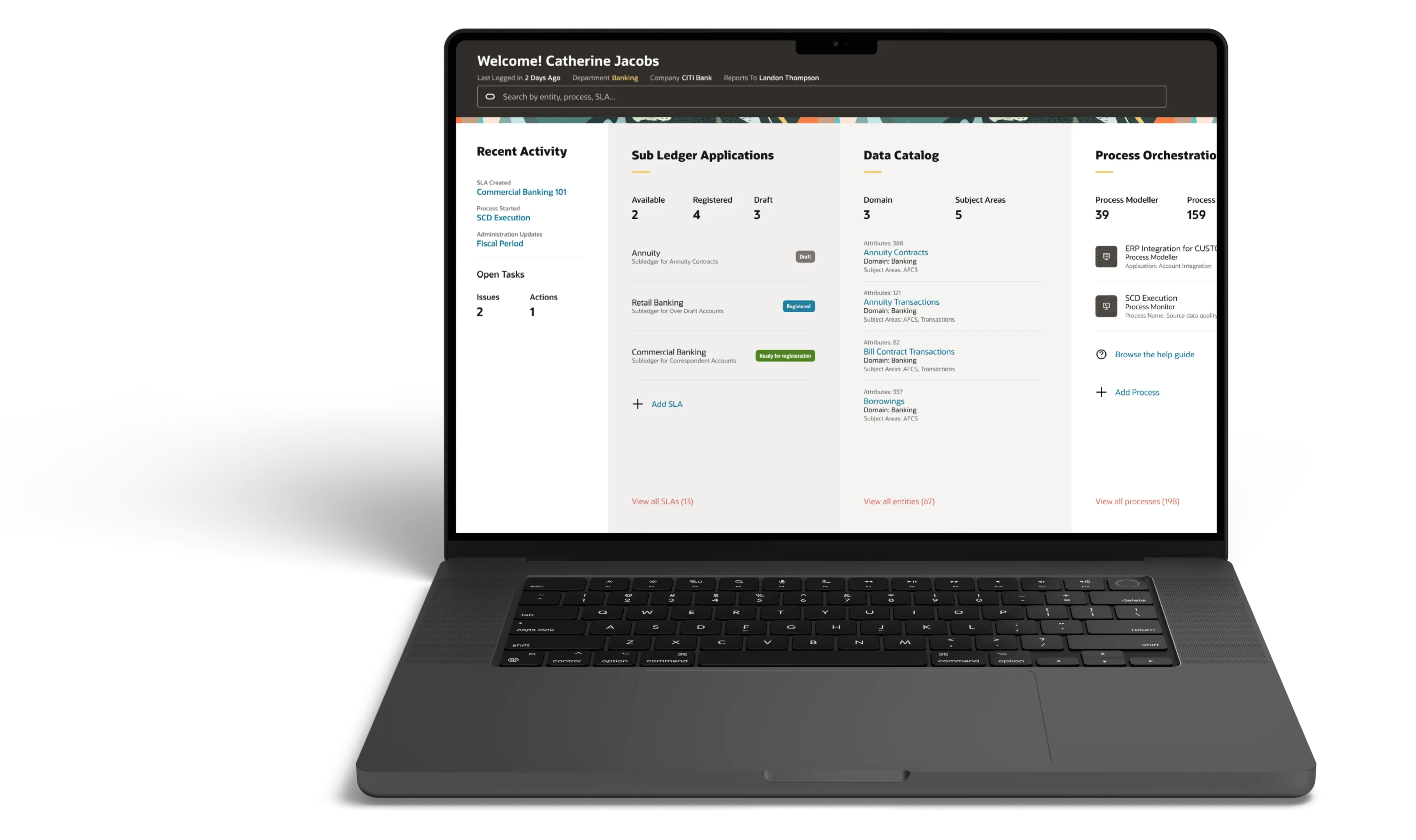
Fig. 01 · The navigational spine of AFCS, surfacing provenance and trust state.
Context
Large financial institutions pull accounting data from dozens of sources - core banking platforms, sub-ledgers, subsidiary ERPs, bank feeds, and domain-specific tools - before they can produce a single trusted view of the books.
AFCS is Oracle's accounting foundation layer for that work: it collates, standardizes, enriches, and publishes financial data from multiple systems, and reconciles balances from core systems with general ledger and management ledger figures in Oracle ERP Financials Cloud.
The experience centers on business and finance analysts who must trust that data is complete, current, and reconciled before they sign off on numbers that land in board decks, regulatory filings, and management reports.
Goal
- Design a platform to collate and standardize data for financial reporting.
- Enrich data from numerous sources to streamline accounting workflows.
My role
- Led the UX redesign of the Data Catalog, aligning it with Oracle's Redwood Design System.
- Analyzed the existing application to identify key areas for improvement.
- Ensured the new UI was modern, consistent, and user-friendly.
Key decisions
Data Catalog as the navigational spine
The legacy experience used deep, menu-based navigation that scattered data sources, rules, and transformations across unrelated screens, forcing analysts to remember where things lived instead of exploring what data existed. I reframed the application around a Data Catalog - a searchable, browsable inventory of every source, pipeline, and ledger touchpoint - as the primary navigational spine that everything else extends from.
Trust signals as first-class UI
For AFCS, the core question for analysts is not just "What is this number?" but "Can I stand behind it?". I designed persistent trust signals - last synced time, validation status, reconciliation state, and exception counts - directly into the main data and balance views so users can see data quality and process health without leaving their workflow.
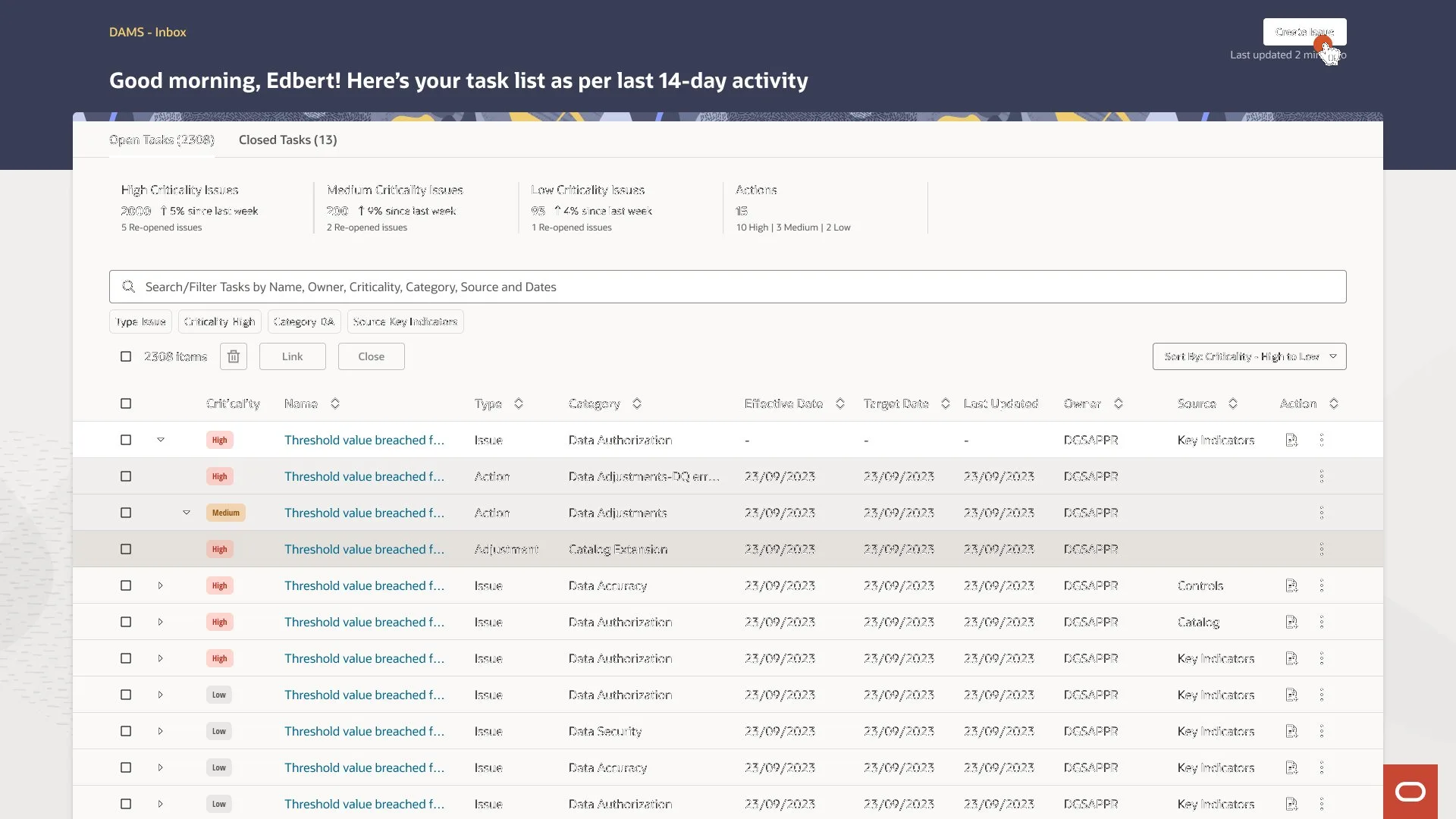
Fig. 02 · Landing page inbox showing high-priority data validation issues.
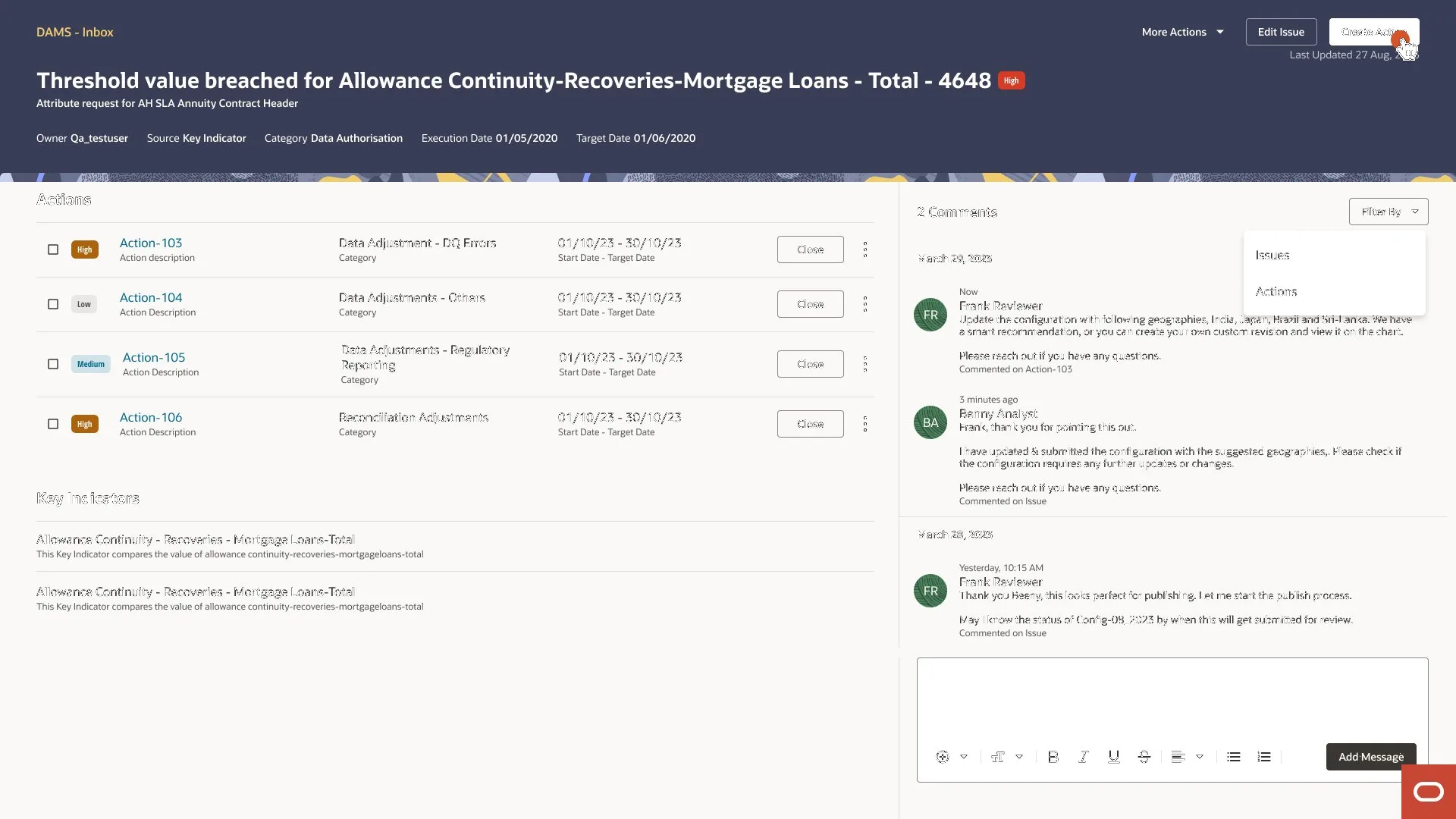
Fig. 03 · Issue detail view with actions, comments, and key indicators.
Impact
- Significantly improved UX performance and IA.
- Received positive feedback from business stakeholders and executives.
- Successfully modernized the product to meet current enterprise standards.
Takeaway
What I took forward
In data-heavy enterprise tools, users trust the numbers when the interface shows it trusts itself: always surface provenance, freshness, and reconciliation state alongside the data, not buried in secondary screens or logs.
Tools & methods
Figma
Oracle Redwood Design System
User Goals
Clarity of Purpose
Wireframe & Hi-Fi
Prototyping