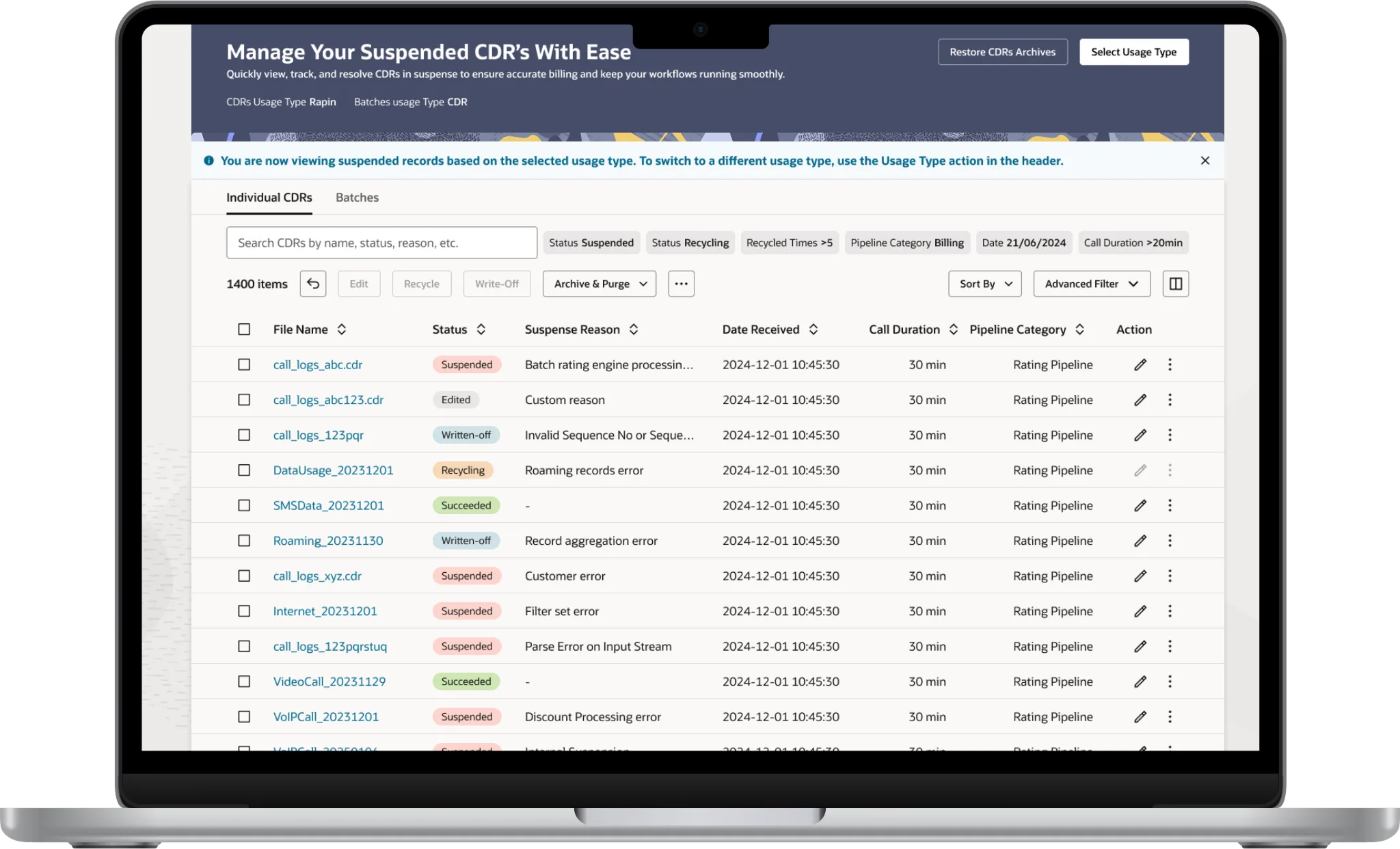
Fig. 01 · Status-driven worklist with bulk-action patterns, replacing folder navigation.
Context
Telecom billing systems process millions of Call Detail Records (CDRs) every day, and when those records fail validation because of wrong tariff codes, missing subscriber data, or rating inconsistencies they fall into suspense instead of being billed.
A growing suspense queue represents delayed revenue and operational risk, since each unresolved record is money waiting on the table. BRM-SMS is the operator-facing console where these suspended records are triaged, corrected, and re-released back into the billing stream, making its workflow design critical to both cash flow and team efficiency.
Goal
- Develop an enterprise system to manage and resolve suspended Call Detail Records (CDRs).
- Minimize revenue leakage and ensure data integrity in the billing ecosystem.
My role
- Mapped complex CDR workflows and designed a user-centric interface with the Redwood Design System.
- Created status-driven navigation, advanced filtering, and bulk-action patterns.
- Conducted "Shape of Data" analysis to inform the information architecture.
Key decisions
Status-driven worklist instead of folders
Early concepts organized work using folders like "New," "In Progress," and "Resolved," but operators described their real question as "What needs my attention right now?". I redesigned the experience around a status-driven worklist with urgency signals - age and revenue weighting surfaced through sort and filter controls - so operators could continually surface what needed attention rather than navigate static buckets.
Bulk actions as a first-class pattern
A single operator may handle hundreds of CDRs a day, so one-by-one actions were not acceptable for core flows. I established bulk select, bulk correction, and bulk re-release as primary, reusable patterns - fast, guarded with clear confirmations, and fully reversible - and these interaction patterns were later reused across other billing surfaces.
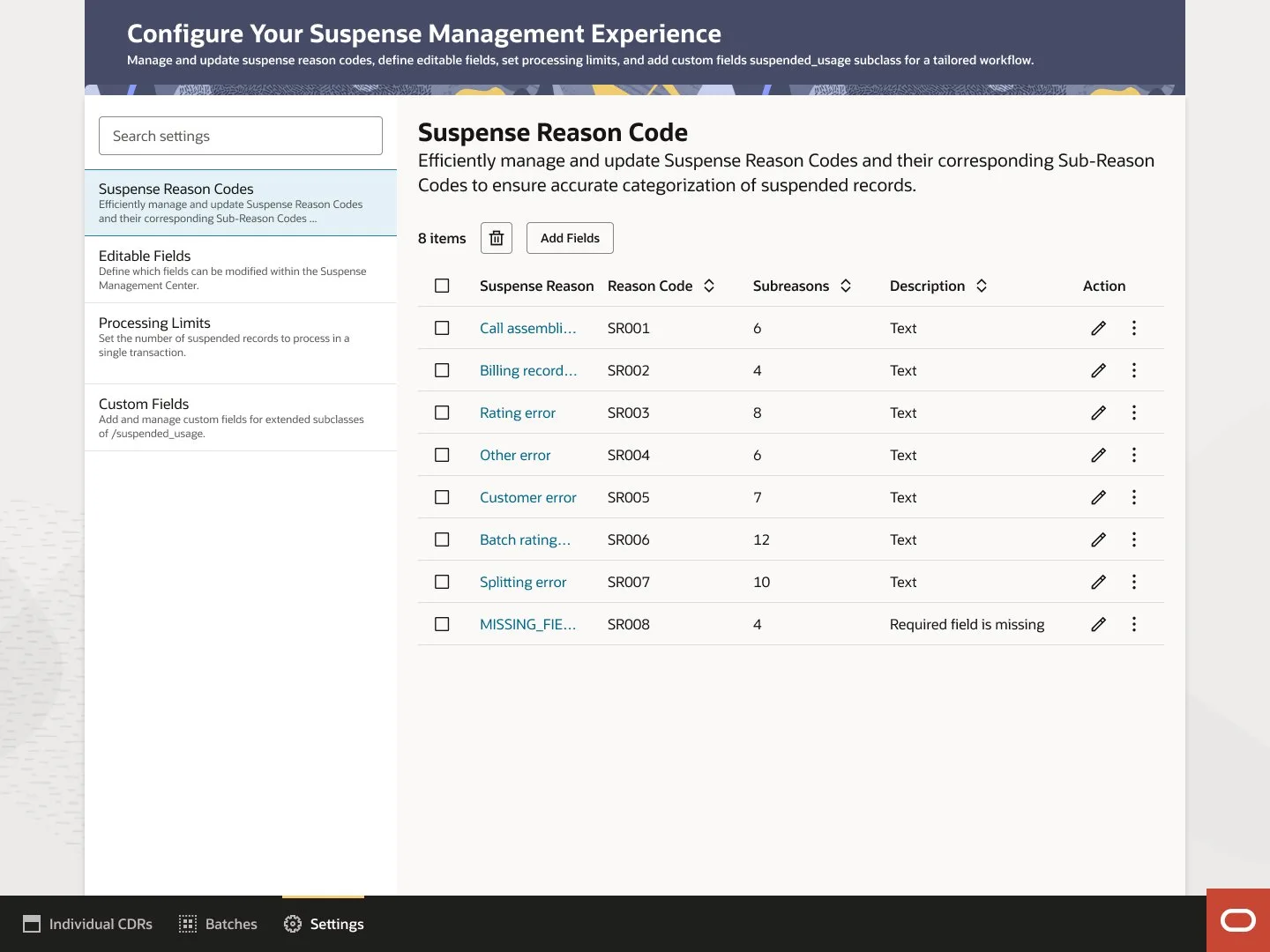
Fig. 02 · Configuration screen for suspense reason codes and processing rules.
Impact
- Reduced average CDR resolution time from 4 hours to under 2 hours.
- Increased operator satisfaction scores from 3.5 to 4.5 out of 5.
- Helped lower revenue leakage from 10% to below 2%.
Takeaway
What I took forward
When the job is high-volume operations, design for the queue first and the individual item second - the worklist is effectively the product. Optimizing how quickly and safely operators can understand, prioritize, and clear the queue has more impact on business outcomes than over-investing in the detail view of any single record.
Tools & methods
Figma
Oracle Redwood Design System
Persona Workshops
IA
Clarity of Purpose
Task Analysis
Prototyping